


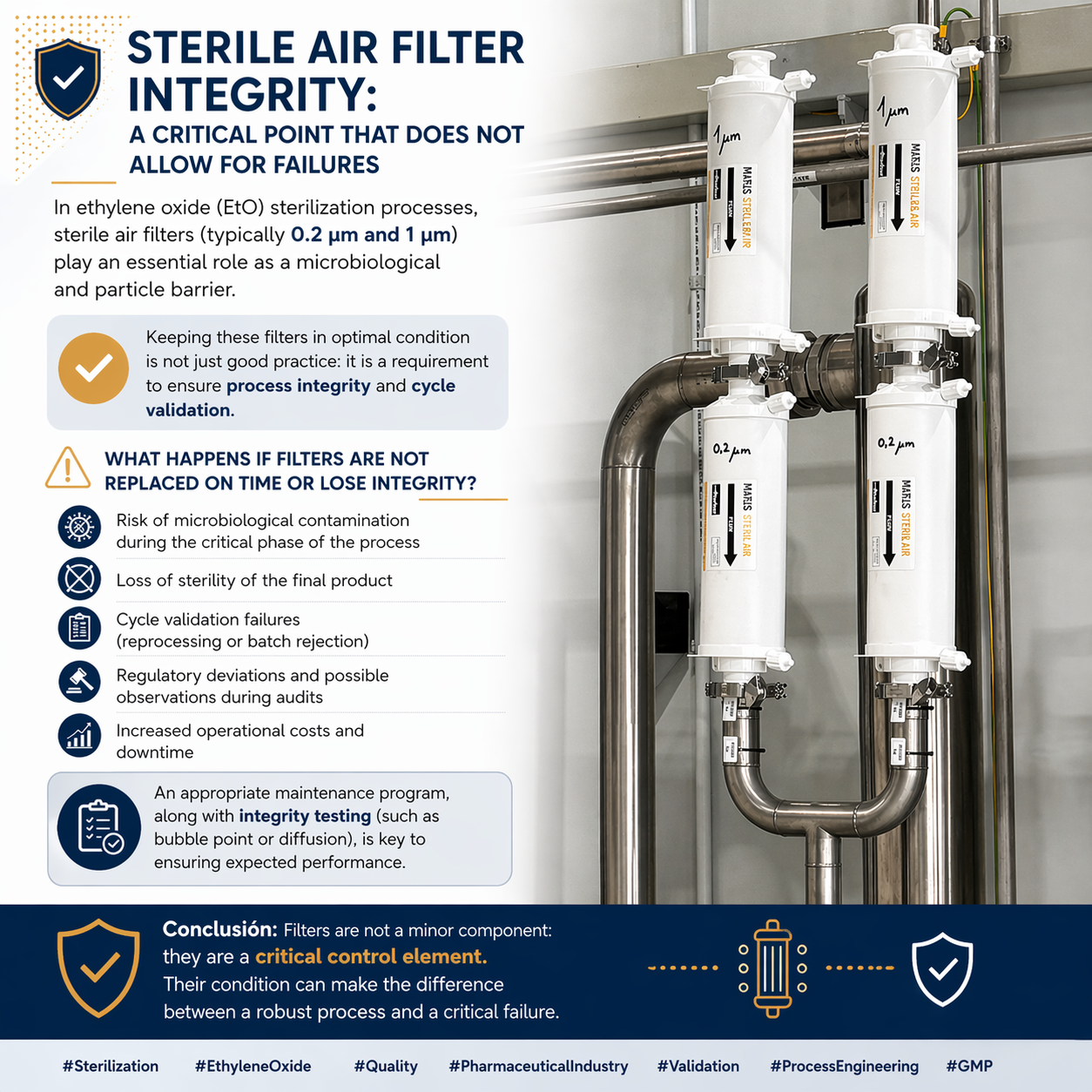
In ethylene oxide (EtO) sterilization processes, sterile air filters (typically 0.2 μm and 1 μm) play an essential role as a microbiological and particle barrier.
Keeping these filters in optimal condition is not just good practice: it is a requirement to ensure process integrity and cycle validation.
WHAT HAPPENS IF FILTERS ARE NOT REPLACED ON TIME OR LOSE INTEGRITY?
- Risk of microbiological contamination during the critical phase of the process.
- Loss of sterility of the final product.
- Cycle validation failures (reprocessing or batch rejection).
- Regulatory deviations and possible observations during audits.
- Increased operational costs and downtime.
An appropriate maintenance program, along with integrity testing (such as bubble point or diffusion), is key to ensuring expected performance.
Conclusion:
Filters are not a minor component: they are a critical control element.
Their condition can make the difference between a robust process and a critical failure.